|
istr-graphs for subtrees of very large systems
Information hiding
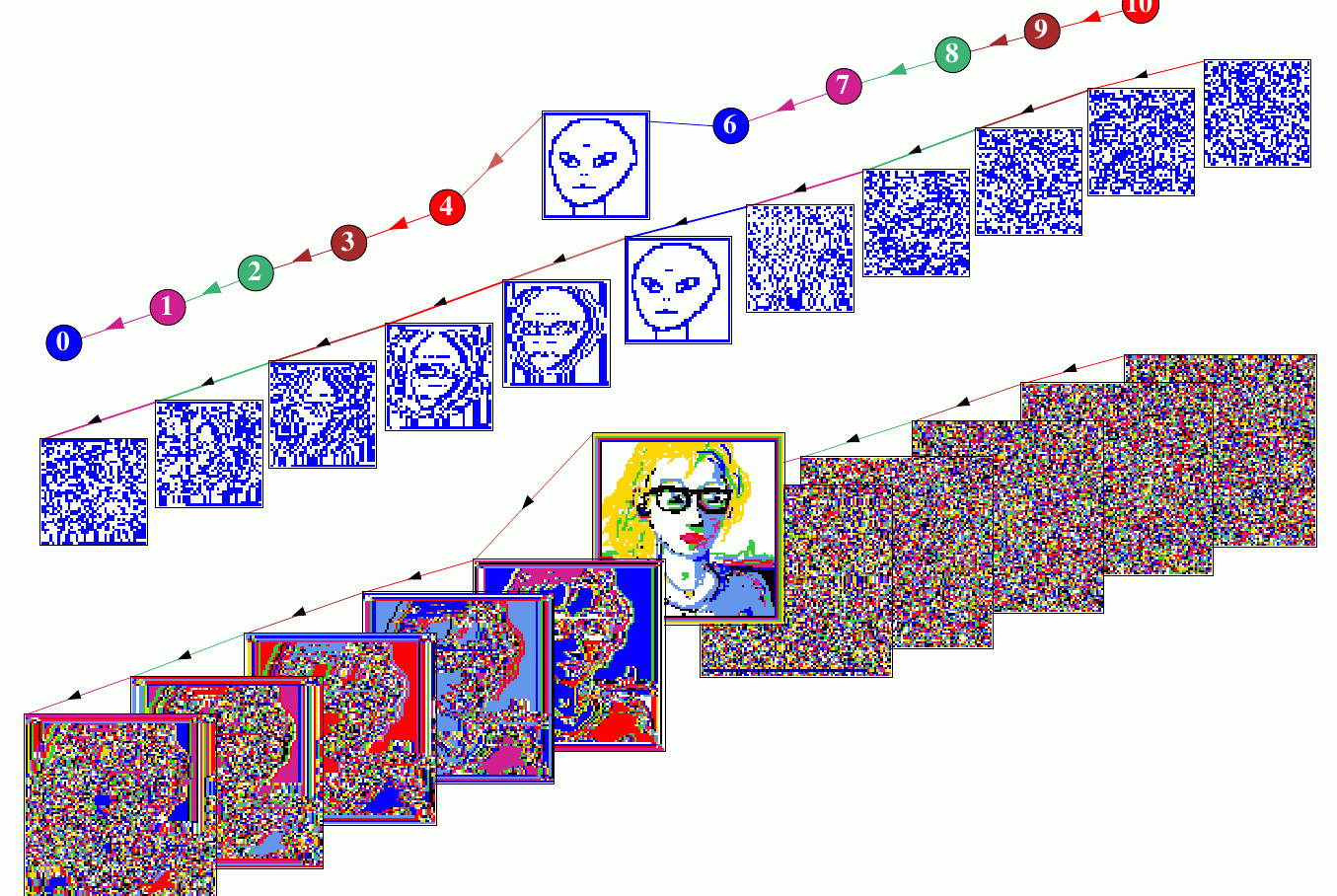
in chaos within trajectories of 1d CA chain-rules shown
as istr-graphs, and demonstrating how the istr-graph subtree
can deal with very large systems because the critical
limiting metric is the total number of nodes where disc
numbers follow the order of node computation, not the system
state size, which would make decimal
numbering impossible. The istr-graph was based on the classic subtree
from the seed using “backward
for subtree-b”, “forward before backwards?” and “limit backsteps-b”.
Once drawn, the istr-graphs were adjusted with drag options.
Top: v2k7 40×40 n=1600 2d “Alien”, with
numbered discs on either side. Below Top: the full “Alien”
subtree in 2d. Bottom: v8k4 88×88 n=7744
“Portrait”.
istr-graph of a compressed basin of attraction field
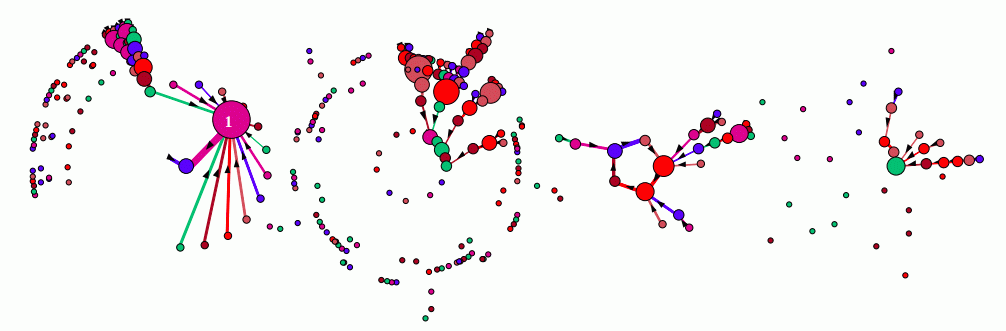
The istr-graph with default compression on, suppressed
equivalent basins and trees, but showing disconnected garden-of-Eden
nodes in equivalent trees (v2k3 rcode 110 n=10).
| istr-graph of a single basin (with compression) and various node displays
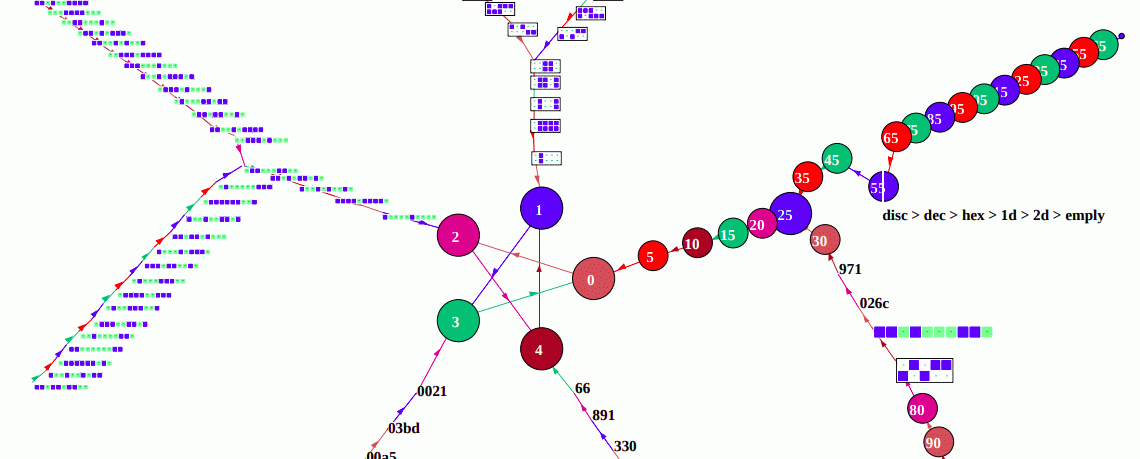
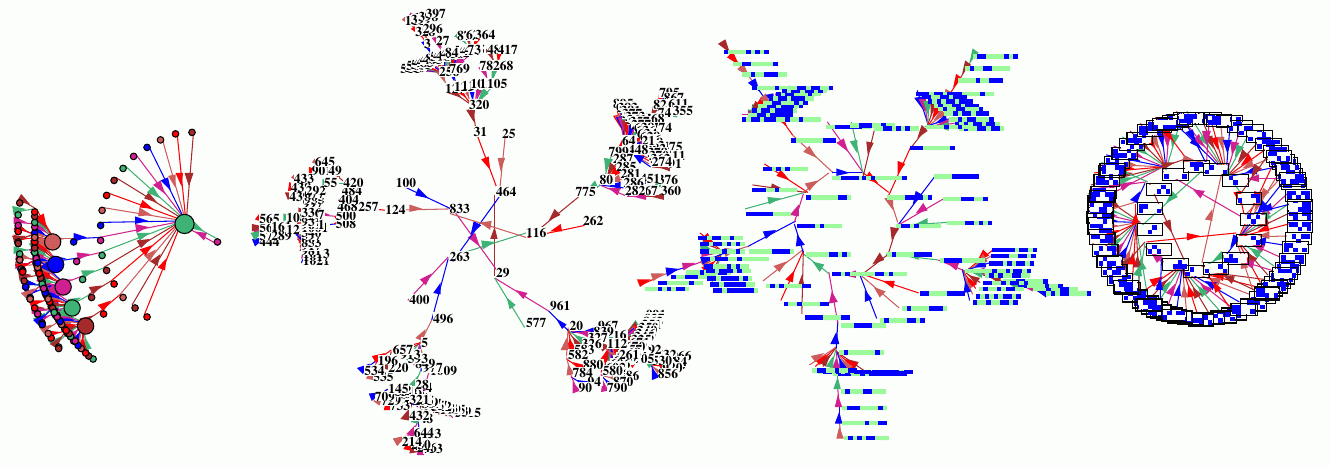
Illustrating different node displays for an istr-graph in
drag mode, where “disc numbers” follow the sequence of node computation
not the decimal state.
In the ibaf-graph, disc and decimal state
numbers are the same. This example shows a single basin with
compression of equivalent subtrees which may reorder attractor states,
as in this case, accounting for cycle cross links. (1d CA v2k3 n=10
rcode 30). Lower Right: 5 alternative displays within a
transient (“empty” is skipped). Upper Right: a “label”
noting the toggling sequence of the 6 alternatives node displays. In other transients nodes were
toggled to dec, hex, and 1d/2d patterns.
disc-numbers: difference between the istr-graph and ibaf-graph
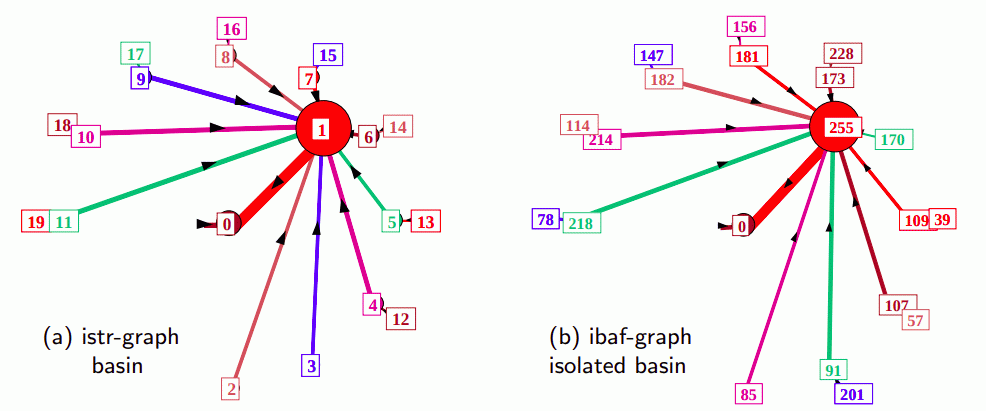
Disc numbers, which also feature in the drag-reminder, differ
for istr/ibaf graphs. The istrgraph disc numbers (a) follow the
computation order (zero onward) of successive nodes independent of the
system state size which can be very large as in figure 4, and where
the critical limiting metric is the total number of nodes. By
contrast, the ibaf-graph disc numbers (b) are the same as the state
decimal equivalents. The alternative framed disc number
design was toggled with “nodes-N” in the initial-graph.
|